



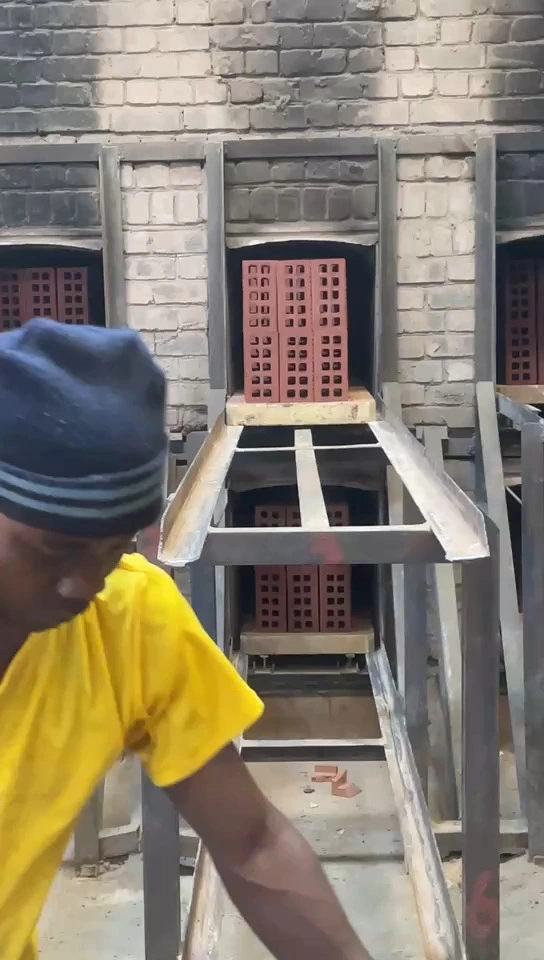
Pushing Pusher slab bat kiln
A push-plate kiln is a continuous high-temperature sintering equipment, also known as a push-plate furnace or push-plate tunnel kiln. It is widely used in the firing processes of various fields such as ceramics, electronic components, magnetic materials, and new energy materials. Its core principle involves placing the material on heat-resistant push plates, which are sequentially pushed into the kiln by a hydraulic propulsion system at fixed intervals. The material travels with the push plates through the preheating zone, high-temperature firing zone, and cooling zone, completing the entire thermal treatment process.
5.0
design customization
Please fill out the form below to request a quote or to request more information about us. Please be sure to upload customized requirement documents or pictures, and we will get back to you as soon as possible with a response. we're ready to start working on your new project, contact us now to get started.
Please fill out the form below to request a quote or to request more information about us. please be as detailed as possible in your message, and we will get back to you as soon as possible with a response. we're ready to start working on your new project, contact us now to get started.
This equipment supports oxidation, reduction, or inert atmosphere control, allowing the introduction of gases such as air, nitrogen, and hydrogen to meet the process requirements of different materials. The kiln body typically employs a multi-layer composite refractory material structure, for example, using alumina hollow sphere bricks in the high-temperature zone and mullite lightweight bricks in the low-temperature and cooling zones to enhance insulation performance and reduce energy consumption.
Modern pusher-type kilns feature precise temperature control capabilities, with four independent heating zones (using molybdenum wire/silicon molybdenum rods) achieving a temperature control accuracy of ±5℃. Combined with PID instruments and tungsten-rhenium thermocouples, this ensures product consistency.
In terms of applications, pusher-type kilns are suitable for batch production of products such as MLCC ceramic capacitors, zirconia ceramics, lithium cobalt oxide cathode materials, and purple clay teapots. Their advantages include precise temperature control, stable operation, high product yield, and support for automated continuous operation, significantly improving production efficiency. Some advanced models are also equipped with waste heat recovery systems, which utilize the thermal energy from the cooling section to preheat incoming materials, achieving energy saving and consumption reduction.
Core Technical Parameters:
Rated Temperature: 1650°C (some models up to 1800°C)
Common Operating Temperature: 1300–1765°C (adjusted based on material and process)
Temperature Control Accuracy: ±1°C to ±5°C (high-precision models up to ±1.5°C)
Number of Heating Zones: 4–19 zones (multiple independent PID control for temperature zones)
Heating Elements: Molybdenum wire, molybdenum-silicon rods, silicon-carbon rods, etc., typically arranged top/bottom or on both sides
Furnace Chamber Dimensions (Typical): Length: 8–35.5 meters (standard 8–18 meters, custom up to 35.5 meters)
Width: 115–910 millimeters
Height (above pusher plate): 120–350 millimeters
Pusher Plate Dimensions (Common): 100×100×40 mm (corundum-mullite)
340×340×30 mm (silicon carbide or silicon nitride-bonded silicon carbide)
Pushing Speed: 200–3000 mm/h (adjustable, commonly 400–770 mm/h)
Pushing Cycle: 1 plate/15 minutes (corresponding to ~400 mm/h)
Daily Output: Approximately 34 kg/day (based on 24-hour operation, depending on material density and crucible size)
Protective Atmosphere: Hydrogen, ammonia decomposition gas, nitrogen, argon, weak reducing or oxygen-rich atmospheres, etc.
Protective Gas Consumption: ≤5 m³/h
Power Supply: 380V ±10%, three-phase five-wire or single-phase 380V, 50Hz
Total Power: 52 kW to 300 kW (depending on furnace type and production capacity)
Temperature Uniformity: ≤±5°C (high-temperature zone, 20mm above pusher plate)
Furnace Surface Temperature Rise: ≤85°C (some models ≤60°C)
Cooling Method: Water-cooled (two-stage) or air-cooled + waste heat recovery
Control System: PLC + touch screen, supports automatic/manual switching, data recording, and curve setting
Common Operating Temperature: 1300–1765°C (adjusted based on material and process)
Temperature Control Accuracy: ±1°C to ±5°C (high-precision models up to ±1.5°C)
Number of Heating Zones: 4–19 zones (multiple independent PID control for temperature zones)
Heating Elements: Molybdenum wire, molybdenum-silicon rods, silicon-carbon rods, etc., typically arranged top/bottom or on both sides
Furnace Chamber Dimensions (Typical): Length: 8–35.5 meters (standard 8–18 meters, custom up to 35.5 meters)
Width: 115–910 millimeters
Height (above pusher plate): 120–350 millimeters
Pusher Plate Dimensions (Common): 100×100×40 mm (corundum-mullite)
340×340×30 mm (silicon carbide or silicon nitride-bonded silicon carbide)
Pushing Speed: 200–3000 mm/h (adjustable, commonly 400–770 mm/h)
Pushing Cycle: 1 plate/15 minutes (corresponding to ~400 mm/h)
Daily Output: Approximately 34 kg/day (based on 24-hour operation, depending on material density and crucible size)
Protective Atmosphere: Hydrogen, ammonia decomposition gas, nitrogen, argon, weak reducing or oxygen-rich atmospheres, etc.
Protective Gas Consumption: ≤5 m³/h
Power Supply: 380V ±10%, three-phase five-wire or single-phase 380V, 50Hz
Total Power: 52 kW to 300 kW (depending on furnace type and production capacity)
Temperature Uniformity: ≤±5°C (high-temperature zone, 20mm above pusher plate)
Furnace Surface Temperature Rise: ≤85°C (some models ≤60°C)
Cooling Method: Water-cooled (two-stage) or air-cooled + waste heat recovery
Control System: PLC + touch screen, supports automatic/manual switching, data recording, and curve setting
FAQ
Q1: What is a pusher kiln?
A: A pusher kiln is a continuous high-temperature sintering furnace that uses push plates to move products through the furnace. It completes heating, sintering, heat preservation, and cooling processes continuously, making it suitable for large-scale industrial production.
Q2: What materials can be processed in a pusher kiln?
A: Pusher kilns are commonly used for ceramics, electronic ceramics, alumina ceramics, zirconia ceramics, magnetic materials, powder metallurgy products, battery materials, and other advanced industrial materials.
Q3: What is the maximum operating temperature of a pusher kiln?
A: The working temperature depends on the kiln design and material requirements. Standard pusher kilns usually operate from 800°C to 1800°C, while customized models can achieve higher temperatures for special applications.
{{item.score}} Stars
{{item.pre}}%
{{item.nickname ? (item.nickname.slice(0, 2) + '*****') : item.source === 1 ? 'mall buyer' : '--'}}
{{item.comment_time}}
Review in the {{item.country}}
{{itemAttr.params_key}}: {{itemAttr.params_value}}
Get in touch with us
Just leave your email or phone number in the contact form so we can send you a free quote for our wide range of designs!
Ready to work with us ?
Copyright © 2026 Zhengzhou Yingfeng Machinery Co., Ltd. - www.zzyfmc.com | Sitemap | Privacy Policy