



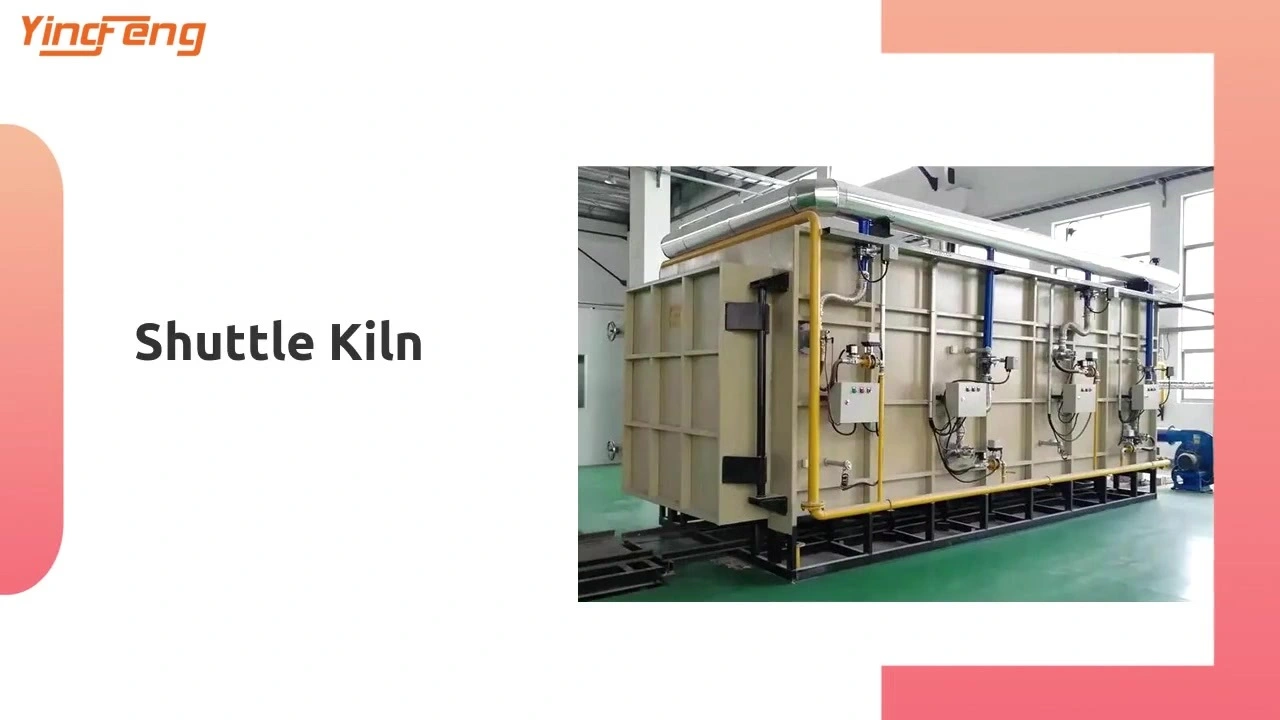
Fiber High Temperature Ceramic Shuttle Kiln
The shuttle kiln is a kiln fired intermittently, similar in structure to a matchbox. The kiln car is pushed into the kiln for firing. After firing, it is pulled out in the opposite direction to unload the fired ceramics. The kiln car is like a shuttle, so it is called a shuttle kiln. Shuttle Kiln.
Shuttle kilns are classified according to the energy used: natural gas furnaces, gas generators and direct coal-fired furnaces. Natural gas furnaces are environmentally friendly, energy efficient, and have a high maximum temperature. In the early stage, natural gas pipelines need to be opened or filled with gas, and a special natural gas burner needs to be configured. The gas gas generator is mainly composed of furnace body, air supply system, water supply system, coal feeding mechanism, slag discharge device, coke gas, electrical control system, etc.
The shuttle kiln is a batch kiln, which can not only meet the continuous large-scale production, but also can be used for small-scale intermittent production. The production method and time arrangement are very flexible. industrial equipment.
Application Industries
1. Ceramic Industry
Used for firing ceramic tableware, sanitary ceramics, artistic ceramics, ceramic tiles, and special ceramic products.
2. Advanced Ceramics Industry
Suitable for electronic ceramics, piezoelectric ceramics, magnetic materials, ceramic substrates, and precision ceramic components.
3. Refractory Industry
Used for manufacturing refractory bricks, kiln furniture, insulation materials, and high-temperature resistant products.
4. Powder Metallurgy Industry
Applicable for sintering metal powder products and advanced composite materials.
5. Chemical and New Materials Industry
Used for high-temperature treatment of catalysts, inorganic materials, and functional materials.
FAQ
Q1: What materials can be fired in a shuttle kiln?
A1: A shuttle kiln can fire ceramics, advanced ceramics, electronic ceramics, refractory materials, ceramic powders, magnetic materials, and other high-temperature materials.
Q2: What is the maximum temperature of a shuttle kiln?
A2: The maximum firing temperature depends on kiln design and application requirements. Industrial shuttle kilns can generally be customized for temperatures from 1000°C to above 1800°C.
Q3:What are the advantages of a shuttle kiln compared with a tunnel kiln?
A3:Compared with tunnel kilns, shuttle kilns offer greater flexibility, lower initial investment, easier operation, and better suitability for small-batch or customized production.